The Home Guard
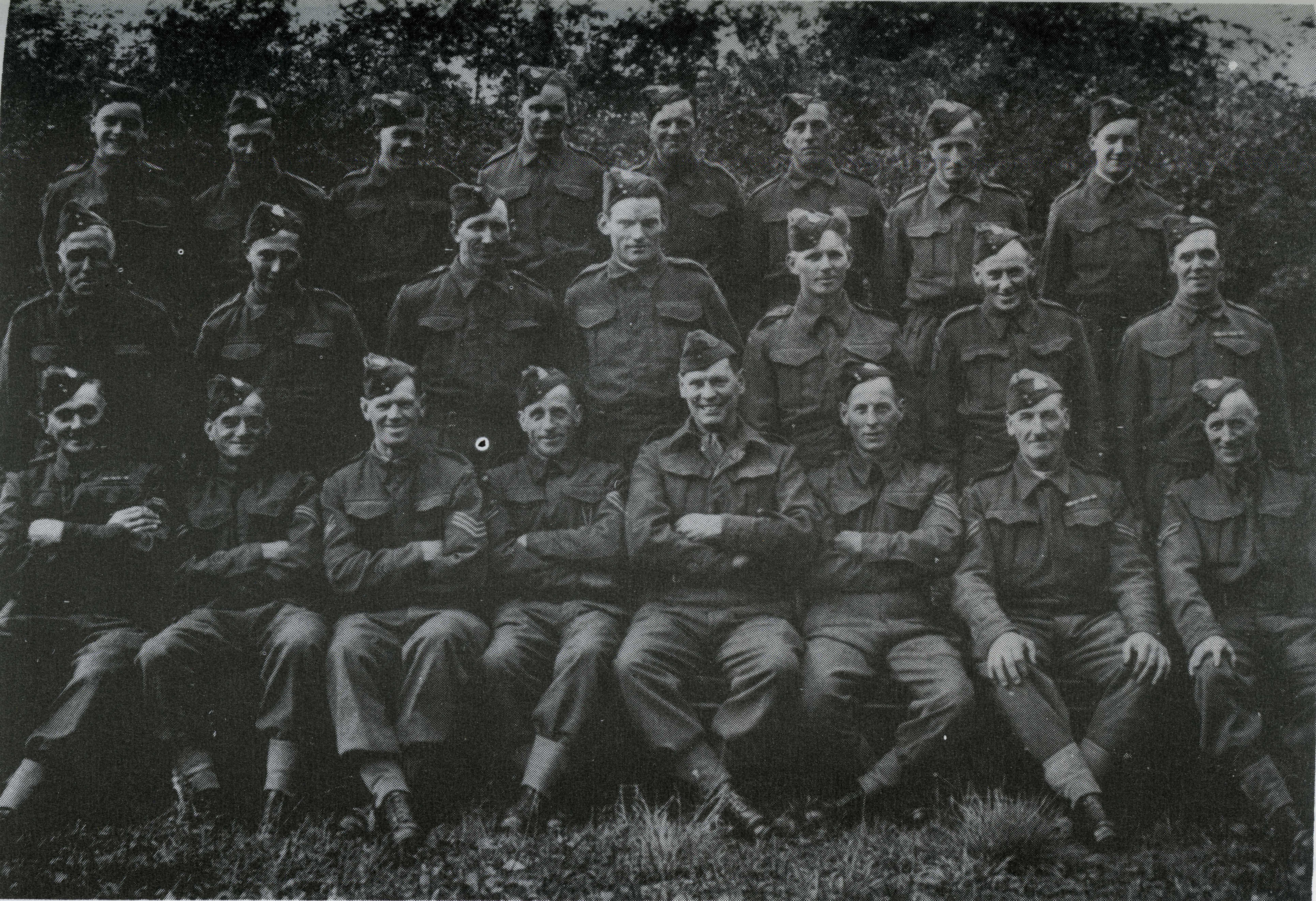
| Back Row: ? Goodwin, A. Abbott, J. Last, F. Ablitt, L. Race, E. Davey, E. Allum, ? Goodwin |
| Middle Row: H. Race, W. Abbott, F. Chilvers, H. Abblitt, C. Abblitt, W. Warnes, S. Forsdyke |
| Front Row: W. Ablitt, S. Studd, C. Whiting, T. Allum, Capt. George Stedman, S. Buckle, ? Goodwin, W. Chilvers |
The following is a list of those known to be in our Stonham Aspal Home Guard.
| Name | Occupation | Village | Date |
|---|---|---|---|
| Abbott, A | Member of Home Guard | Stonham Aspal | c 1940 |
| Abbott, W | Member of Home Guard | Stonham Aspal | c 1940 |
| Ablitt, Cyril Alfred | Member of Home Guard | Stonham Aspal | c 1940 |
| Ablitt, F | Member of Home Guard | Stonham Aspal | c 1940 |
| Ablitt, H | Member of Home Guard | Stonham Aspal | c 1940 |
| Ablitt, W | Member of Home Guard | Stonham Aspal | c 1940 |
| Alexander, T | Member of Home Guard | Stonham Aspal | c 1940 |
| Allum, A E | Member of Home Guard | Stonham Aspal | c 1940 |
| Allum, E | Member of Home Guard | Stonham Aspal | c 1940 |
| Allum, H J | Member of Home Guard | Stonham Aspal | c 1940 |
| Allum, R E | Member of Home Guard | Stonham Aspal | c 1940 |
| Allum, S W | Member of Home Guard | Stonham Aspal | c 1940 |
| Allum, T | Member of Home Guard | Stonham Aspal | c 1940 |
| Buckle, S | Member of Home Guard | Stonham Aspal | c 1940 |
| Buckles, W | Member of Home Guard | Stonham Aspal | c 1940 |
| Chilvers, F | Member of Home Guard | Stonham Aspal | c 1940 |
| Chilvers, W | Member of Home Guard | Stonham Aspal | c 1940 |
| Cripps, George Norman | Member of Home Guard, In Command | Stonham Aspal | c 1940 |
| Davey, E | Member of Home Guard | Stonham Aspal | c 1940 |
| Finbow, S | Member of Home Guard | Stonham Aspal | c 1940 |
| Forsdyke, C S | Member of Home Guard | Stonham Aspal | c 1940 |
| Forsdyke, S | Member of Home Guard | Stonham Aspal | c 1940 |
| Forsdyke, W | Member of Home Guard | Stonham Aspal | c 1940 |
| Freeman, R J | Member of Home Guard | Stonham Aspal | c 1940 |
| Garnham, W | Member of Home Guard | Stonham Aspal | c 1940 |
| Goodwin, E | Member of Home Guard | Stonham Aspal | c 1940 |
| Goodwin, R | Member of Home Guard | Stonham Aspal | c 1940 |
| Jeffery, G | Member of Home Guard | Stonham Aspal | c 1940 |
| Last, J | Member of Home Guard | Stonham Aspal | c 1940 |
| Last, Roy | Member of Home Guard | Stonham Aspal | c 1940 |
| Race, H | Member of Home Guard | Stonham Aspal | c 1940 |
| Race, L | Member of Home Guard | Stonham Aspal | c 1940 |
| Spall, R | Member of Home Guard | Stonham Aspal | c 1940 |
| Stedman, George | Member of Home Guard | Stonham Aspal | c 1940 |
| Studd, R | Member of Home Guard | Stonham Aspal | c 1940 |
| Studd, S | Member of Home Guard | Stonham Aspal | c 1940 |
| Thurlow, T | Member of Home Guard | Stonham Aspal | c 1940 |
| Turner, R S | Member of Home Guard | Stonham Aspal | c 1940 |
| Warnes, W | Member of Home Guard | Stonham Aspal | c 1940 |
| Whiting, C | Member of Home Guard | Stonham Aspal | c 1940 |
If you have any stories or more information on our "Dad's Army", please share them with me. I would love to hear from you. Suzie
After the fall of France in 1940, when Germany, almost unchallenged, poured into the country. Anthony Eden (War Minister), asked all male civilians between the ages of 17 and 65, who had not been drafted into the services, to start a new fighting force called The Local Defense Volunteers (LDV). This was later to be renamed by Winston Churchill as The Home Guard.
There was to be no medical examination and as long as you were male, between the stated ages (which was not strictly adhered to) and capable of free movement, then you were urged to enrol at the local Police Station.
Within a day, over 250,000 men had volunteered and by the end of the month 750,000 men had put themselves forward. The Home Guard comprised 1.5 million local volunteers who were otherwise ineligible for military service, and this number never dropped below 1 million. After December 1941, male civilians could be called up to join the Home Guard.
Most men would work all day at their full time jobs and then in the evening commence their Home Guard duties. These duties could consist of:
- Manning aircraft batteries
- Patrolling waterways, railways, coastlines, factories and aerodromes
- Clearing up debris
- Searching rubble for people who were trapped
- Building pill boxes
- Defence lines of anti-tank obstacles, barbed wire barriers, road blocks
- Placing obstacles in fields to prevent enemy aircraft landing
- Practicing guerrilla tactics
- Removal of signposts
- Target practice
- Bomb disposal
The Home Guard was not organised around Towns or Villages, it was organised around Zones.
| Nationally | Locally |
|---|---|
| Zones (large areas, often whole Counties or half-counties | Suffolk Zone, Eastern Command. This covered the whole of Suffolk and was resposible for: invasion defence; roadblocks; anti-paratrooper measures; coastal fallback lines; inland stop lines |
| Groups (Sub-areas within Zones) | Eye Group (Sometimes called "Eye Sub-Zone"). This Group covered: Eye; Debenham; Stonham Aspal; Occold; Thorndon; Yaxley; Wetheringsett; Mendlesham; Brockford; Stonham Parva and Earl Soham. This was a strategic inland corridor between the coast and the Stour / Gipping defensive lines. |
| Battalion (large areas, often whole Counties or half-counties | 10th Battalion, Suffolk Home Guard (Eye Battalion). This Group covered: Eye; Debenham; Stonham Aspal; Occold; Thorndon; Wetheringsett; Mendlesham; Brockford; and Earl Soham. This was a strategic inland corridor between the coast and the Stour / Gipping defensive lines. |
| Companies (clusters of Villages) | H Company (Debenham Company) This Company covered: Debenham; Stonham Aspal; Stonham Parva; Mendlesham Road area; Brockford; part of Wetheringsett. Debenham was the Company HQ. |
| Platoons (individual vVillages or pairs of Villages) | Debenham Platoon - Responsibilities included: roadblock at Debenham High Street; patrols along the A1120; guarding the Debenham/Mendlesham corridor; observation posts near the church and the water tower; liaison with ARP wardens and the Invasion Committee. Stonham Aspal Platoon - Responsibilities included: roadblock at the crossroads by the church; patrols along the A140 corridor; guarding the Stonham Aspal/Earl Stonham stretch; observation posts near the rectory and the school; coordination with Stonham Parva Platoon. |
Suffolk's Home Guard Battalions were drawn on strategic lines, rather than local convenience. The map in The Hold (Suffolk Archives) shows that Battalions were shaped by Defense needs, not by proximity to the nearest large Town.
The Battalions boundaries followed defense corridoors. The Suffolk Home Guard Map shows Battalions arranged along:
- The A140 corridoor
- The Gipping Valley
- The Stour Valley
- The expected German advance routes inland from the coast
Both Debenham and Stonham Aspal sit on a key inland route between the coast (Felixstowe and Sizewell landing Zones) and the interior (Bury St Edmunds and Sudbury defence line). So they were grouped with Villages forming part of that defensive chain.
Debenham had a garrison of 99 Home Guard (89 Class I and 10 Class II). This force was organised into:
- Keep garrison - 64
- Mobile reserve - 17
- Defended locality (Stowmarket Road) - 18
The Home Guard were disbanded on 3rd December, 1944, with a parade in London of 7,000 men.